Fairfield Summers: Why Humid Air Clogs Dryer Vents Faster

[ez-toc]
Summer in Fairfield brings longer days, warmer temperatures, and increased humidity. While most homeowners expect humidity to affect comfort levels inside the home, many are surprised to learn it can also impact their dryer vent system. At THH Cleaning, we often explain that dryer vent cleaning in Fairfield becomes especially important during the summer months because humid conditions can contribute to lint buildup, reduced airflow, and dryer performance issues.
Your dryer works by removing moisture from clothing and pushing that warm, damp air through the vent system. When outdoor humidity levels are already high, the dryer has to work harder to eliminate moisture efficiently. Combined with lint accumulation and restricted airflow, Fairfield’s humid summers can create conditions that cause dryer vents to clog faster than many homeowners realize.
How Dryer Vents Remove Moisture from Your Home
Every time your dryer runs, it removes moisture from clothing and transports that moisture outside through the dryer vent. The vent system is designed to carry warm, humid air away from the appliance and out of the home.
When the vent is clean and unobstructed, airflow remains strong and moisture can exit efficiently. When lint buildup begins to restrict the vent, airflow slows down and moisture can linger inside the system longer than intended.
This is where summer humidity can make an existing problem worse. The more difficult it becomes for moisture to escape, the harder the dryer has to work.
Why Fairfield Summers Create Additional Dryer Vent Challenges
Summer air naturally contains more moisture than cooler seasons. As humidity levels rise, the air outside becomes less effective at helping moisture dissipate quickly.
Your dryer is essentially competing against already humid outdoor conditions. The appliance must remove moisture from clothing while trying to push damp air into an environment that is already saturated with humidity.
Although the dryer can still function, humid weather often causes clothes to take longer to dry. Longer drying cycles mean more lint production, more heat, and more opportunity for buildup inside the vent system.
How Humidity Contributes to Lint Accumulation
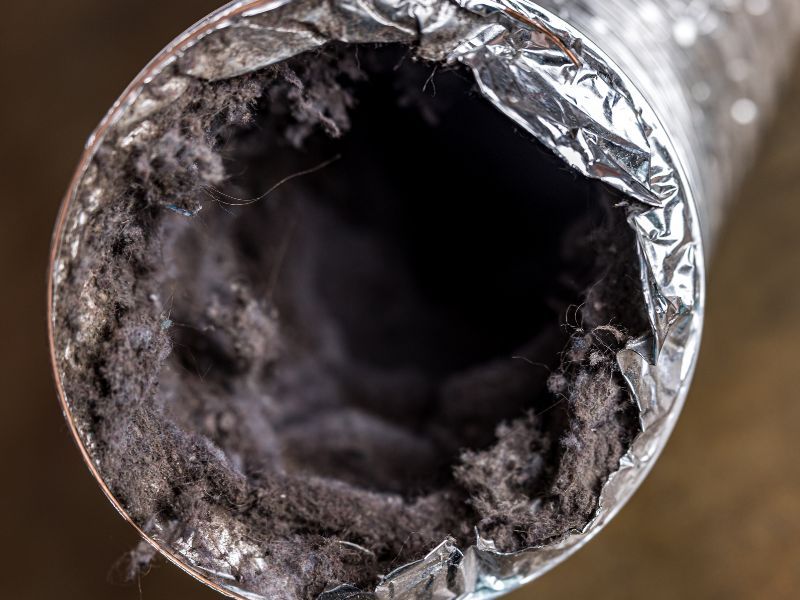
Many homeowners think lint is always dry and loose, but humidity can change how lint behaves inside a vent system. Moisture can cause lint particles to cling more easily to vent surfaces, especially in areas where airflow is already restricted.
Instead of moving completely through the system, damp lint may settle along the walls of the vent. Over time, this buildup grows thicker and further reduces airflow.
The result is a cycle where reduced airflow traps more moisture, which helps more lint stick inside the vent, leading to even greater restrictions.
Why Longer Drying Times Mean More Vent Problems
One of the most common summer complaints homeowners notice is that clothing takes longer to dry. While humidity is often part of the reason, a partially clogged vent can magnify the problem.
When drying cycles become longer, the dryer runs for extended periods. This means:
- More lint is produced
- More heat is generated
- More moisture moves through the vent
- The appliance experiences additional strain
- The vent system accumulates buildup more quickly
If drying times continue increasing throughout the summer, the vent should be inspected before the restriction becomes more severe.
Warning Signs Humidity Is Affecting Your Dryer Vent
Humid weather can make existing vent issues more noticeable. Homeowners should pay attention to changes in dryer performance during the summer months.
Common warning signs include:
- Clothes requiring multiple drying cycles
- The laundry room feeling unusually warm
- Excess humidity near the dryer
- The dryer becoming hot during operation
- A musty smell around the laundry area
- Lint collecting around the vent opening
- Clothing remaining damp after a normal cycle
- Higher utility bills during summer months
These symptoms often indicate airflow restrictions that should be addressed before they become larger problems.
Why Moisture and Lint Are a Bad Combination
Lint buildup alone can restrict airflow, but when moisture is added to the equation, the situation becomes more complicated. Damp lint can compact more easily inside the vent, creating thicker accumulations that are harder for airflow to move through.
This buildup may develop gradually and go unnoticed until drying performance declines significantly. Because much of the vent system is hidden behind walls or appliances, homeowners often do not realize how much lint has accumulated.
Regular maintenance helps prevent this combination of moisture and lint from creating major restrictions.
How Humid Air Increases Fire Risk
Humidity itself does not cause dryer fires, but it can contribute to the conditions that allow dangerous lint buildup to develop faster. As airflow becomes restricted, heat may remain trapped inside the dryer and vent system longer than intended.
Lint is highly flammable, and excessive accumulation combined with heat creates a safety concern. The longer a clogged vent is ignored, the greater the potential for overheating.
This is one reason summer can be an important time to inspect and clean dryer vents. Increased dryer use and humid conditions can accelerate buildup that may have already been developing throughout the year.
How Dryer Vent Cleaning Helps During Fairfield Summers
Professional dryer vent cleaning removes lint, dust, and debris that collect inside the vent system. By restoring airflow, the dryer can move moisture out more efficiently and operate under less strain.
Benefits of dryer vent cleaning include:
- Improved airflow
- Shorter drying times
- Reduced lint accumulation
- Lower strain on the dryer
- Improved energy efficiency
- Reduced overheating concerns
- Better moisture removal
- Enhanced dryer performance
Summer is often an ideal time to schedule service because it addresses buildup before it creates larger performance or safety issues.
Why Large Families May Notice Summer Dryer Problems First
Households that run multiple loads of laundry every week often experience vent issues sooner than smaller households. More laundry means more lint moving through the system and more moisture being exhausted through the vent.
Families with children, athletes, pets, or large bedding loads may notice drying performance changes earlier because the dryer is simply being used more frequently.
When combined with humid summer weather, heavy laundry use can accelerate vent buildup and make annual maintenance even more important.
Can Humidity Affect Exterior Dryer Vent Openings?
Yes. Exterior vent openings are exposed to changing weather conditions throughout the year. High humidity, rain, debris, and seasonal growth around the home can all affect how well the exterior vent functions.
If the vent cover becomes obstructed or does not open properly, airflow can become restricted. This compounds the problems already created by lint accumulation inside the vent system.
Regular inspection of the exterior vent helps ensure air can leave the home as intended.
Simple Ways to Reduce Summer Dryer Vent Problems
Homeowners can take several steps to help reduce dryer vent issues during Fairfield’s humid months.
- Clean the lint screen after every load
- Avoid overloading the dryer
- Inspect the exterior vent regularly
- Watch for longer drying times
- Keep the laundry room ventilated
- Schedule annual dryer vent cleaning
- Address performance changes quickly
- Replace damaged vent hoses when needed
These habits help reduce buildup and support more efficient dryer operation throughout the summer.
Why Fairfield Homeowners Choose THH Cleaning
THH Cleaning understands how seasonal conditions affect dryer vent performance. Many homeowners do not connect summer humidity with longer drying times and increased lint buildup, but these issues often go hand in hand.
Our team helps Fairfield homeowners maintain cleaner, safer, and more efficient dryer vent systems. Whether you have noticed performance changes or simply want to stay ahead of maintenance, professional cleaning can help keep your dryer operating at its best.
Final Thoughts About Dryer Vent Cleaning During Fairfield Summers
Fairfield’s humid summers can create conditions that allow dryer vents to clog faster than many homeowners expect. Increased moisture, longer drying cycles, and additional lint accumulation all contribute to reduced airflow and greater strain on the dryer.
By staying proactive and scheduling professional dryer vent cleaning in Fairfield, homeowners can improve efficiency, reduce lint buildup, shorten drying times, and help protect their home from avoidable dryer vent problems throughout the summer season.
Frequently Asked Questions About Dryer Vent Cleaning and Summer Humidity
Does humidity actually make dryer vents clog faster?
Humidity can contribute to lint sticking more easily inside the vent system. Combined with longer drying cycles, this can accelerate buildup over time.
Why do my clothes take longer to dry during summer?
High humidity means there is already more moisture in the air. Your dryer must work harder to remove moisture from clothing, which can increase drying times.
Can humid weather damage my dryer?
Humidity itself does not damage the dryer, but restricted airflow caused by lint buildup can increase strain on the appliance and reduce efficiency.
How often should I clean my dryer vent?
Most homes benefit from annual dryer vent cleaning. Homes with large families, pets, or heavy laundry use may need more frequent service.
What are the biggest warning signs of a clogged dryer vent?
Long drying times, excess heat, humid laundry rooms, burning smells, and lint around the vent opening are all common warning signs.
Can professional dryer vent cleaning improve drying performance?
Yes. Removing lint buildup improves airflow, allowing moisture to exit the system more efficiently and helping clothes dry faster.